
Proofreading marks are special symbols and abbreviations that are used to indicate errors and make necessary corrections.
In the days of online grammar checkers, editing modes, and “check spelling while typing” settings enabled, the classic proofreading is an almost forgotten art.
When you have to edit the text printed out on the sheet of paper, you have to fit your remarks in the spaces given by the original text.
That’s what proofreading marks are for. They are special symbols and abbreviations proofreaders and editors use to indicate errors and make corrections.
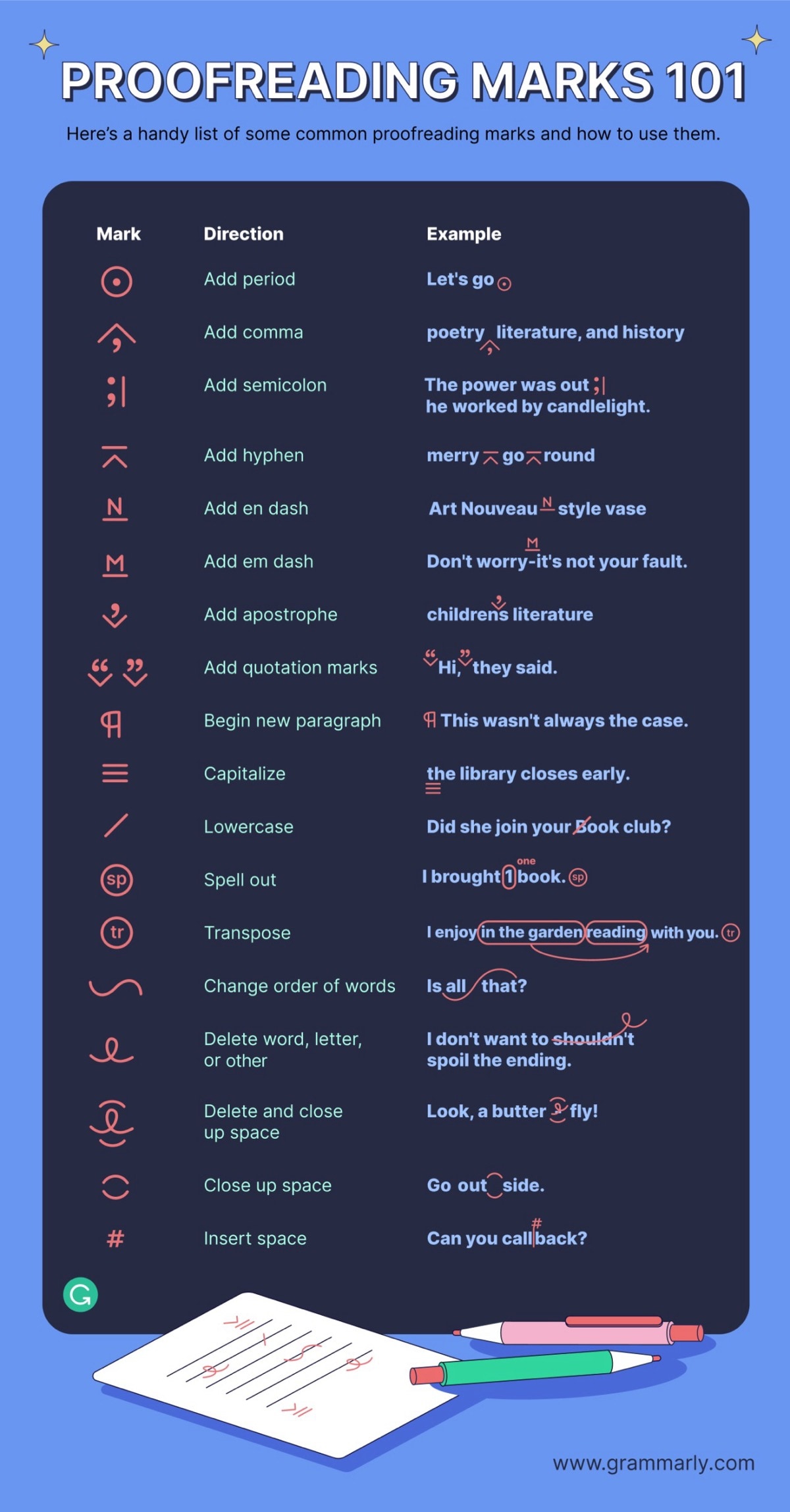
For instance, the caret (^) is used to indicate that you should insert something. The hashtag (#) tells that you should add space. The three lines, so popular in navigation menus (hamburger icon), are used to capitalize a letter.
The most common proofreading marks are included in a handy chart prepared by the Grammarly in the proofreading section of their blog.
💬 Part of a traditional practice that’s still used today, proofreading marks help proofreaders identify errors in printed documents such as manuscripts.
Click on the image to see it enlarged.
Source: The Ultimate Proofreading Tool and Guide – Grammarly / Lead image: Freepik







 Geek Updated
Leave a Reply